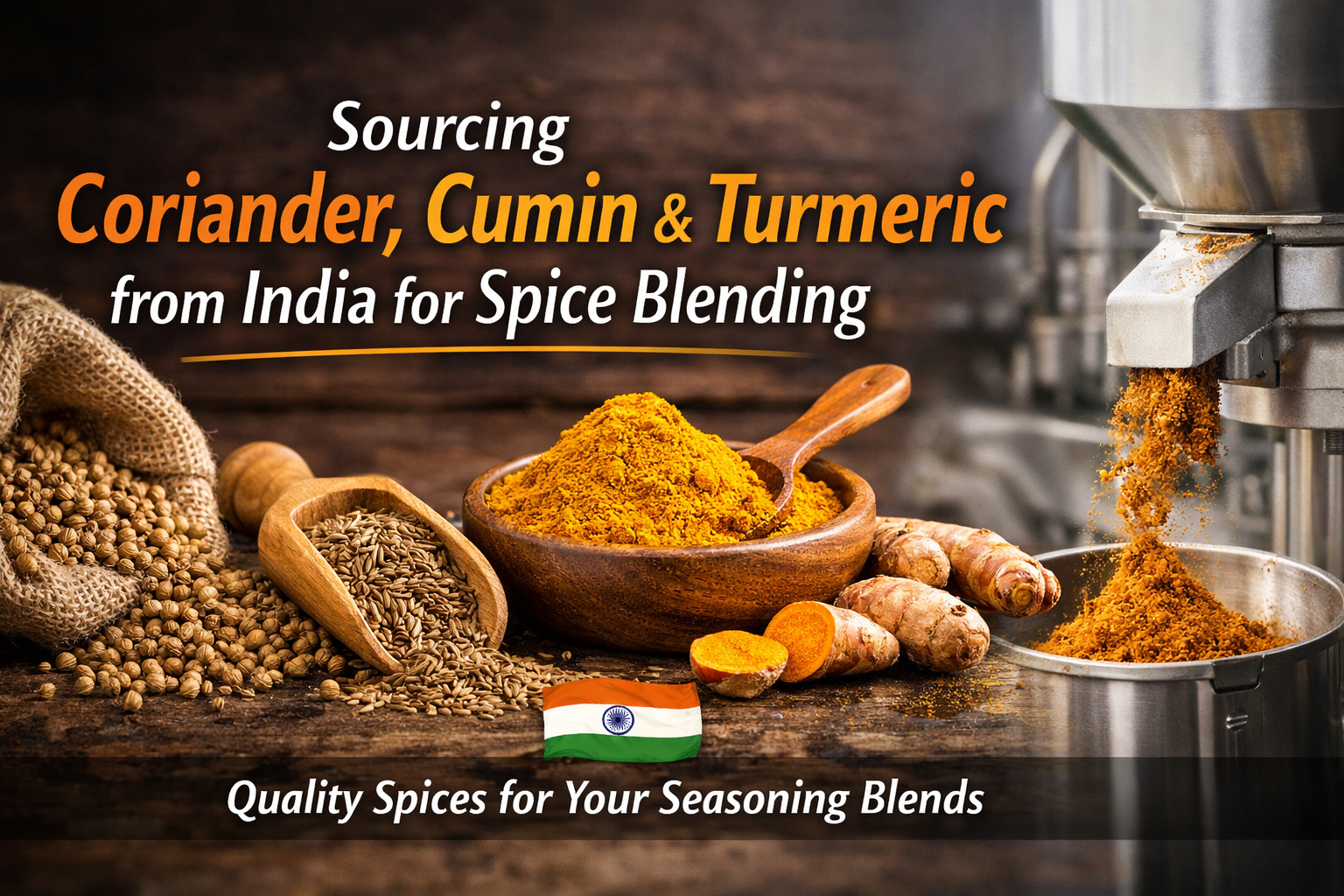
For spice blenders and seasoning manufacturers, sourcing spices is not about buying the most visually perfect seeds in the market.
What matters is how the spice performs after grinding, blending, and cooking.
When sourcing coriander seeds, cumin seeds, and turmeric powder from India, experienced spice blenders typically focus on three things:
- consistent aroma and flavor performance
- reliable supply across multiple shipments
- regulatory compliance aligned with their target market
At Thar BioCrop, most conversations with international buyers revolve around these exact priorities.
Because when spices are going into spice blends, curry powders, seasoning mixes, or culinary bases, appearance quickly becomes secondary.
Performance matters more.
Grinding Grade vs Visual Grade: A Practical Distinction for Spice Blenders
One of the most common misunderstandings in the spice trade relates to grading.
In producing regions, spices such as coriander seeds and cumin seeds are often priced according to:
- seed size
- color uniformity
- visual appearance
Premium grades typically feature larger, greener seeds with more uniform appearance, making them suitable for retail whole-spice packaging.
However, when the destination is industrial grinding, the priorities change.
Professional spice blenders usually prefer:
- strong natural aroma
- stable volatile oil profile
- consistent grinding behavior
- cost efficiency for large-volume blending
In many cases, a standard grinding grade provides the best balance between aroma performance and pricing.
Paying extra for cosmetic seed appearance rarely improves the final spice blend once the seeds are milled.
If you are exploring sourcing options, you can also review our overview of bulk IPM spices and export supply capabilities to understand how sourcing programs are structured for international spice buyers.
Residue Compliance Depends on the Market You Serve
Different spice markets operate under different regulatory frameworks.
For example, spice blenders supplying Europe or other highly regulated markets must ensure their spices meet strict pesticide residue limits and traceability requirements.
International guidelines for pesticide limits in food commodities are widely documented, including by organizations such as the Codex Alimentarius Commission, which establishes global food safety standards.
Other markets may operate under more flexible regulatory structures but still expect reliable quality and clean supply chains.
At Thar BioCrop, sourcing programs can be aligned with the regulatory requirements of the destination market, whether that involves:
- residue-controlled supply chains
- IPM-oriented sourcing practices
- or conventional spice supply for standard commercial markets
This allows spice blenders to source the appropriate spice specification for their market, without paying for compliance levels that may not be necessary for their application.
Turmeric Powder for Spice Blending: Why Curcumin Matters
When turmeric powder is used in spice blends, curcumin content becomes a key parameter.
Curcumin influences:
- color intensity
- visual consistency in the blend
- functional performance in food applications
Many seasoning manufacturers work comfortably with minimum 3% curcumin turmeric powder, which offers reliable color and blending characteristics.
For markets with stricter food safety standards, turmeric powder may also undergo steam sterilization to meet microbiological specifications while maintaining its natural properties.
Consistency in curcumin levels across batches becomes particularly important when turmeric forms part of a base ingredient in large-scale spice blends.
Consistency Matters More Than Spot Pricing
Most professional spice blenders do not buy spices as isolated spot purchases.
Instead, sourcing is often structured around repeat shipments across the year, which helps maintain:
- stable raw material cost
- consistent flavor profile
- predictable production planning
At Thar BioCrop, many supply relationships are built around structured programs where spices such as coriander seeds, cumin seeds, and turmeric powder are supplied across scheduled shipments.
This approach allows spice blenders to maintain batch-to-batch consistency in their blends while managing procurement risk.
Working With a Supplier Who Understands Spice Blending
For spice blenders, the right supplier is not simply a trader offering the lowest quotation.
The right supplier understands:
- how spices behave during grinding
- the difference between visual grade and grinding grade
- the regulatory expectations of different markets
- the importance of consistent supply and batch reliability
At Thar BioCrop, the focus is on supplying spices that perform reliably in seasoning blends, curry powders, spice mixes, and culinary formulations.
Because in professional spice blending, the real test of quality is simple:
how the spice performs in your blend.
Looking for a Reliable Bulk Spice Supplier?
If you are sourcing coriander seeds, cumin seeds, or turmeric powder from India for spice blending, seasoning production, or food manufacturing, the right sourcing structure can make a significant difference to consistency and cost control.
You can reach out to the team at Thar BioCrop to discuss specifications, shipment structures, and sourcing programs tailored to your blending requirements.
👉 Contact us here:
https://tharbiocrop.com/contact-us/